Cape Town After Dark Is a Different City
There is a point in the evening when a city seems to change its personality. During the day, Cape Town can feel almost too beautiful to be real. The mountain sits behind the city, people move between cafés and shops, tourists are coming back from the beach, and everywhere you look there seems to be another view worth stopping for.
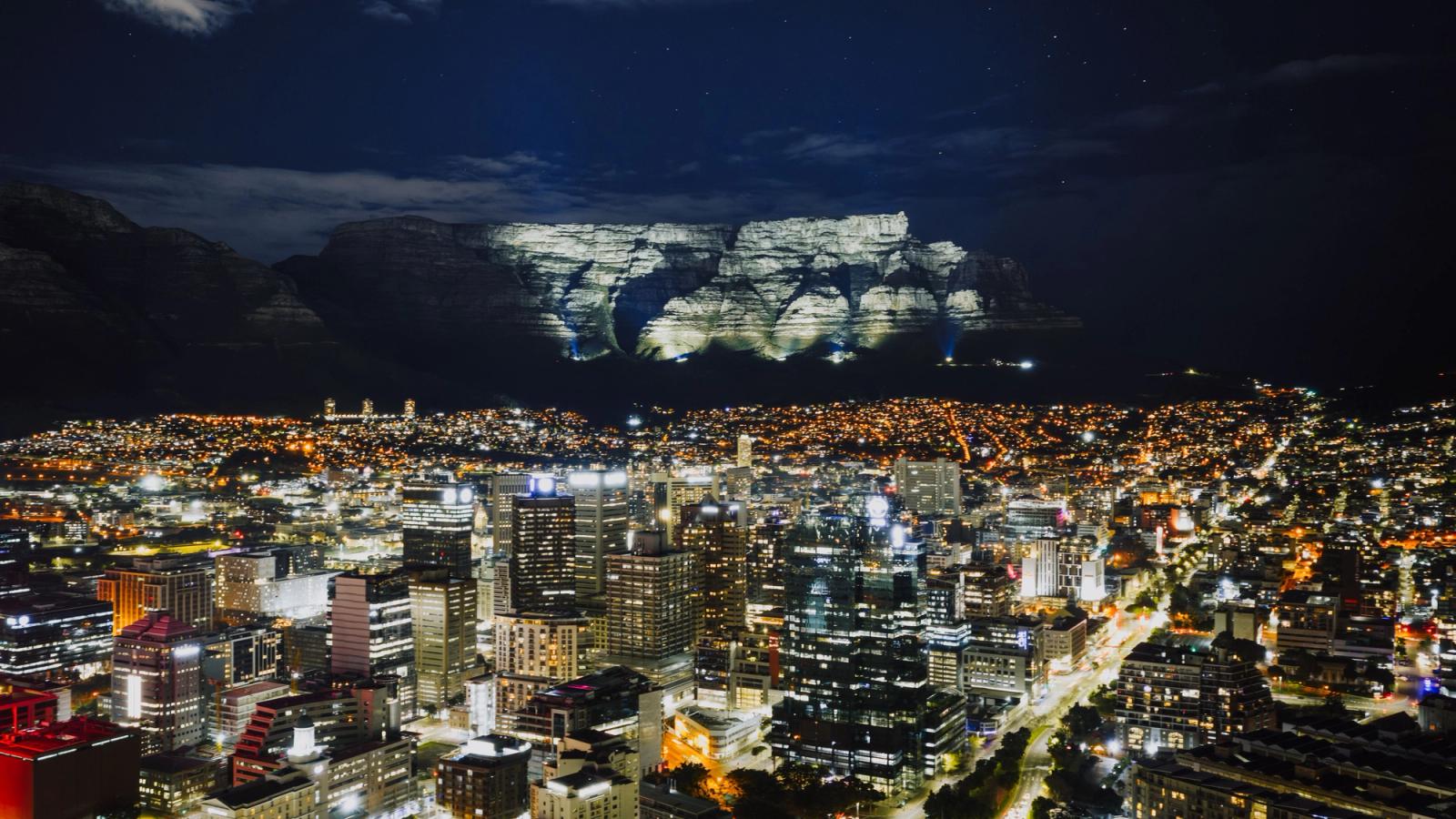
Then the sun starts going down. The light changes first. Table Mountain becomes a darker shape behind the city. Office workers start heading home. Restaurants begin filling up. Music starts coming from places that were quiet a few hours earlier. People who have spent the afternoon sightseeing are deciding where to have dinner.
Cape Town is still the same city. It just doesn’t feel exactly the same anymore.
The city has another rhythm at night
One thing I like about traveling is noticing how a place changes when most of the day’s sightseeing is finished. During the afternoon, you’re usually moving with a purpose. You have somewhere to go. Maybe you’re heading towards the waterfront, a museum, a beach or another attraction on your list.
At night, the reasons for moving around can be different. You’re looking for food. You’re meeting someone. You’re listening to music. You’re sitting outside somewhere with a drink. You’re walking through a busy street with no attraction at the end of it.
That difference matters because you start seeing the city as a place where people actually live, rather than somewhere that was arranged for visitors. Cape Town Tourism describes the Central City as a place where restaurants, cafés, art, music and nightlife come together, with Long Street being one of the better-known areas for evening activity.
And that is where the city starts becoming interesting. Not because everything suddenly becomes a party. Because the city becomes more social.
Long Street is probably the obvious example
Long Street has a reputation for nightlife, but there is more to it than simply finding a bar. During the day, you can walk past shops, restaurants, cafés and old buildings without thinking too much about what the street becomes later.
Then evening arrives and the pace changes. People are sitting outside. Friends are meeting. Restaurants are getting busier. Music starts competing with traffic. Some people are dressed for a night out while others are simply trying to get home.
That’s something I think travelers sometimes forget. A busy street doesn’t automatically mean a nightlife destination. It can also just be a street where people live their evening lives. That distinction is important because it changes how you behave as a visitor. You’re not walking through a theme park. You’re walking through somebody’s city.
Cape Town doesn’t have one kind of night
This is where I think the usual travel articles get a little lazy. They talk about “Cape Town nightlife” as if the entire city goes to the same places after dark. It doesn’t.
There are restaurants. There are music venues. There are quieter neighborhoods. There are places where people go specifically to dance. There are areas where people meet friends for dinner and go home early. There are waterfront spots where the evening is more about the view than the music.
Cape Town Tourism also highlights live music, restaurants, clubs and other evening experiences across the city. So instead of asking, “Where is the nightlife?” A better question might be: What kind of evening do you actually want? Because those are two different questions.
Sometimes the best part is dinner
Not every night out needs to end at a club. Sometimes you have spent the whole day walking, taking pictures, climbing, driving around and trying to fit too much into one itinerary. By evening, all you want is a proper meal and somewhere you can sit down.
That can be the experience. You order something you’ve never tried. You listen to people at the next table talking. You notice how the restaurant is decorated. You ask the person serving you what they recommend. You realize that you have spent the last few hours doing something that wasn’t on your itinerary at all.
Eating. And somehow, it becomes one of the things you remember most.
Then there are the nights when the city feels creative
Cape Town has a strong connection between food, art, music and nightlife. The Central City, for example, hosts First Thursdays, when galleries and museums stay open later and the area becomes a meeting point for exhibitions, performances, food and people moving between different spaces.
I like the idea behind something like that because it changes what “tourism” looks like. You’re not just visiting an attraction. You’re joining something that is happening in the city. There is a difference between being shown a city and being allowed to feel its rhythm for a few hours. The second one usually stays with you longer.
But night-time travel needs a different kind of attention
This is the part that should not be romanticized. A city can be exciting at night and still require common sense. Cape Town Tourism advises visitors not to walk in deserted or dark areas after dusk, to keep valuables secure, to plan routes and to use accredited taxis or reputable transport options. It also recommends staying with others and on well-lit paths when out and about.
That doesn’t mean you should spend your whole evening worrying. It means you should understand that exploring a city after dark isn’t exactly the same as exploring it at two in the afternoon. You don’t need to prove anything.
If a place feels wrong, leave. If you don’t know an area, ask someone who does. If you’re unsure how to get somewhere, sort out your transport before you leave. And don’t assume that because one part of a city feels comfortable at night, every part of it will feel the same. That’s not unique to Cape Town. It’s simply what traveling in a large city requires.
There is something special about seeing a familiar place at night
Imagine spending the day seeing Cape Town for the first time. You have seen the mountain. You’ve been around the city. You’ve taken more photographs than you planned. You’ve probably checked your phone a hundred times to make sure you’re not late for the next thing.
Then the day is finished. You sit somewhere and look back at the city. The mountain is now a dark outline. The streets are lit differently. The people around you are no longer rushing between attractions. The city feels less like a destination and more like a place.
I think that’s when traveling gets interesting. Because during the day, you’re often asking: “What should I see?” At night, the question becomes: “What is this place like when people are simply living their lives?”
Maybe you don’t need a packed night
This is something I would tell anyone visiting Cape Town. Don’t turn the evening into another checklist. You don’t need three restaurants, two bars, a club and a late-night viewpoint just because an itinerary says you can fit them all in.
Pick something you actually want to do. Have dinner. Listen to music. Walk somewhere busy and well-lit. Sit and talk. Watch the city.
If you’re traveling with friends, let the conversation take up some of the evening. If you’re traveling alone, choose an environment where you’re comfortable meeting people. The night doesn’t need to become another achievement.
This is where having someone who knows the city can help
There is a big difference between being told that a city has nightlife and actually knowing how to experience it. A local guide doesn’t just know the popular places. They can help you understand which kind of evening fits what you’re looking for, how long it takes to get somewhere, what areas make sense to combine and when it’s better not to wander around on your own.
That’s part of what makes a good tour useful. It doesn’t have to control every minute. Sometimes it simply removes the uncertainty. You can spend less time wondering where to go and more time actually enjoying where you are. That is the approach I like about Gidi Tour too. The point isn’t to make every trip feel like a timetable. It’s to help visitors experience places with enough local understanding that they can make better choices for themselves.
Cape Town doesn’t stop when the sun goes down
If anything, you begin to notice a different side of it. The mountain is still there. The ocean is still there. The streets are still there. But the people using them have changed. The workers have gone home. Friends are meeting. Restaurants are filling up. Music is coming through open doors.
Some people are starting their night while others are already ending theirs. And somewhere in all of that, you realize something simple. You didn’t travel all this way just to see what Cape Town looks like in a photograph. You came to experience a city. And cities don’t only exist between breakfast and sunset.