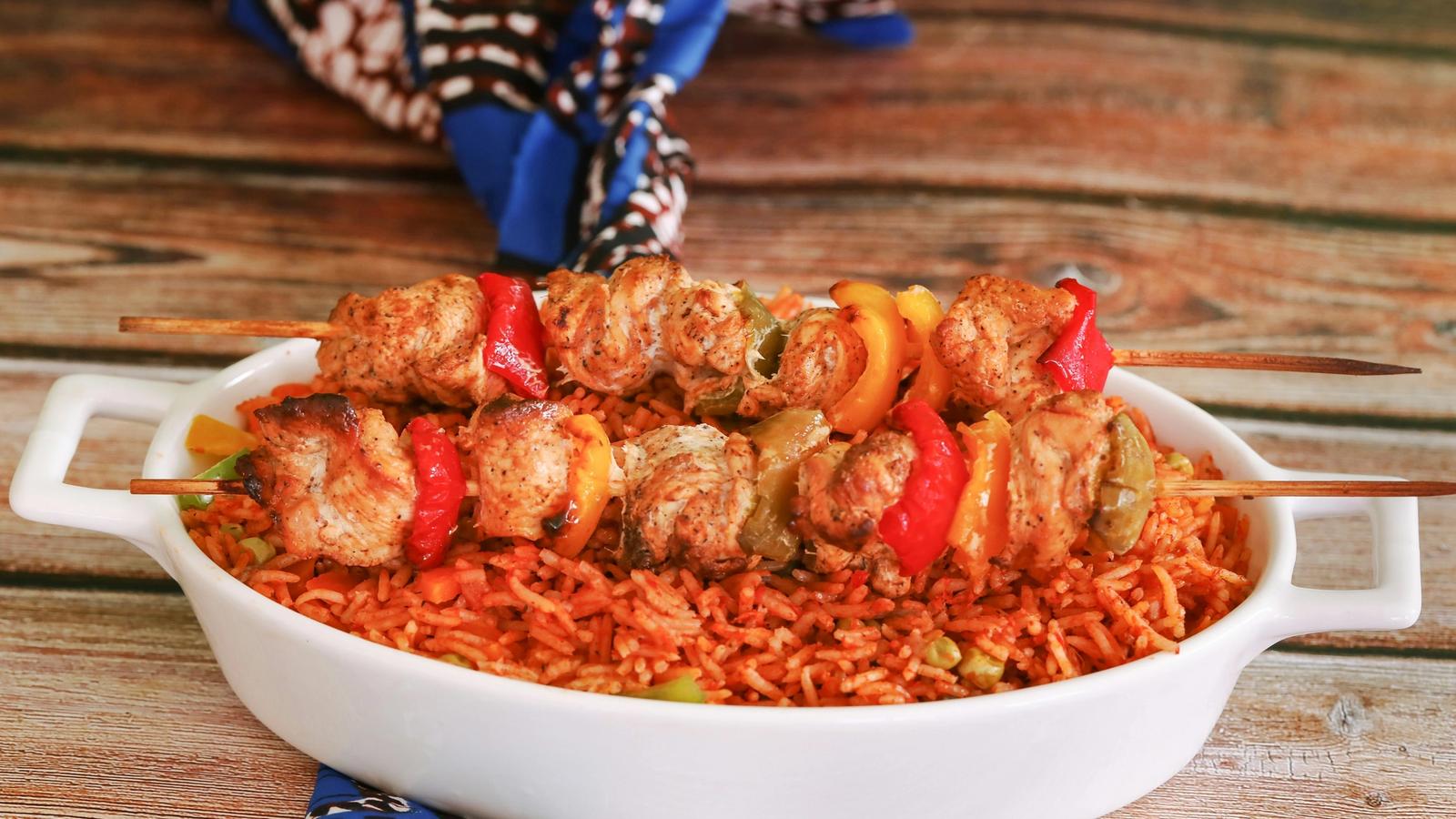
Who Owns Jollof Rice? The African Food Fight That Started Long Before Twitter
If you have ever put a Nigerian and a Ghanaian in the same room and mentioned jollof rice, you already know you might have started something. Someone will defend Nigerian jollof. Someone else will swear Ghanaian jollof is better. Then somebody from Senegal might quietly remind everyone that the story did not begin with either country. Before long, a plate of rice has somehow turned into a debate about national pride, cooking methods, family recipes and who really has the right to call their version the best.
The funny thing is that the argument makes sense when you think about what food means. We don’t just eat food. We attach memories to it. We associate certain dishes with home, family celebrations, weddings, Christmas, parties and childhood. So when someone says their country’s jollof is the best, they are rarely defending rice alone. They are defending something that feels like home.
So where did jollof actually come from?
This is where the story gets more interesting, because there isn’t a simple answer that allows one modern country to walk away with the trophy. The name jollof is widely connected to the Jolof Empire and the Wolof people of the Senegambian region, particularly present-day Senegal and neighboring areas. The Jolof Empire emerged in the thirteenth century and became an important political power in the region before gradually breaking apart into smaller states from the fifteenth and sixteenth centuries.
That history matters because food doesn’t respect the borders we use today. The countries we call Senegal, Gambia, Mauritania, Guinea-Bissau and others exist within a region that has had centuries of movement, trade, migration and cultural exchange. Rice itself also has a much deeper history in West Africa, where different communities developed sophisticated knowledge around growing and preparing African rice long before modern national borders existed. Historical research has also shown the importance of African rice cultivation and African agricultural knowledge in wider Atlantic history.
So when someone asks, “Which country invented jollof?” the honest answer is more complicated than the question suggests. There are strong historical connections between jollof and the Senegambian/Wolof world, but the exact development of the modern dish we know today cannot simply be reduced to one kitchen, one person or one modern country.
Then how did Nigeria and Ghana get involved?
This is where the story becomes much more fun. As food travelled across West Africa, people adapted recipes to the ingredients available to them, their cooking traditions and their own tastes. The basic idea of rice cooked with a rich, seasoned mixture could take different forms depending on where you were eating it. Over time, those differences became part of local identity.
And that is how you end up with Nigerian jollof and Ghanaian jollof being recognizable as their own experiences. Nigerian versions can vary from household to household, while Ghanaian jollof has its own traditions and preferences. The argument over which is better is therefore not really an argument about whether one country copied another. It is an example of how a dish can travel, settle somewhere and become part of the identity of the people who cook it.
Think about it like music. A rhythm can cross a border, and the people who receive it can turn it into something that sounds completely their own. Food works in much the same way. A recipe travels, people change it, ingredients change, cooking methods change and eventually somebody’s grandmother makes it so often that nobody in the family even thinks about where the original idea came from.
The tomato changed the conversation
There is another reason the history of jollof is more complicated than the internet arguments make it seem. The bright red, tomato-based jollof that many people recognize today belongs to a much more recent food history than the ancient history of rice cultivation in West Africa. Tomatoes originated in the Americas and spread to Africa after the Columbian exchange, meaning that the ingredients associated with many modern versions of jollof came together through centuries of global movement.
That doesn’t make jollof any less African. If anything, it shows how African food has always been capable of absorbing outside ingredients and turning them into something deeply local. The same thing has happened with countless dishes around the world. Food history is rarely pure. It is usually a record of people meeting, trading, migrating, adapting and making something new.
This is also why I think the “who invented it?” argument can sometimes miss the best part of the story. Maybe the more interesting question is how a dish with roots in one historical region became something that millions of people across West Africa could look at and say, “That’s ours.”
And then came the party jollof argument
Of course, none of this is going to stop the argument. Because there is another level to the jollof debate that has nothing to do with historians. Party jollof.
That smoky taste from rice cooked in a large pot over a fire or burner, especially when the bottom catches slightly and gives the rice that flavor people spend far too much time trying to recreate at home. In Nigeria, the conversation can quickly move from ordinary jollof to party jollof, and suddenly everyone has an opinion about who makes it properly.
Ghana has its own defenders too. Senegal has its own version and history. Different countries have different names, techniques, ingredients and traditions. Even within one country, two families can cook jollof differently and both insist that theirs is the correct one.
Maybe that’s the point. There probably isn’t one universal jollof recipe because there isn’t one universal West African experience.
The best part of the argument is that everyone is eating
I don’t think the jollof debate needs a winner. If anything, traveling around West Africa should make you less interested in deciding which version is “the real one” and more interested in tasting the differences. Eat jollof in Lagos. Try it in Accra. If you get the opportunity, try a Senegalese version and pay attention to what changes. Ask someone why they cook it that way. Ask what they ate growing up. Ask what makes their mother’s version different.
You might discover that the person sitting beside you has a completely different definition of perfect jollof. And that is the fun of food. A dish can cross borders without losing its identity. It can change without becoming fake. It can belong to several countries at once because people have made it part of their own lives.
So, who owns jollof rice? Nigeria will probably say Nigeria. Ghana will definitely have something to say about that. Senegal has a much older historical connection to the name and the Jolof world. And the rest of West Africa will probably have their own opinions too. Maybe we should stop trying to make the plate choose a side. Order another plate instead. Then argue about it over dinner.