The Places in Nigeria That Look Ordinary Until You Know Their History
There is something strange about walking through a place and not knowing what happened there. You see a road. A building. A market. A hill. Maybe a quiet stretch of coastline. Everything looks normal. Then someone tells you the story behind it, and suddenly the place doesn’t look normal anymore. I think that’s one of the most interesting things about traveling in Nigeria.
We have places where history is not sitting behind glass in a museum. It is built into the streets, the buildings, the landscape and sometimes even the names of places. You can drive past them without realizing how much has happened there.
Take Badagry, for example
If someone told you they were going to Badagry, you might think about the coast, the quiet roads or getting away from the noise of Lagos. But Badagry carries some of the heaviest history in this part of Nigeria.
The town has been a coastal trading centre for centuries, and its location between the lagoon and the Atlantic made it an important point of contact between different peoples and trading networks. It later became deeply connected to the transatlantic slave trade and to the arrival of Christian missionaries. (Badagry Local Government)
Today, you can visit places connected to those different chapters. There is the Badagry Heritage Museum. There are the remains of the Brazilian Barracoon. There is the route towards the coast associated with the slave trade. There are also sites connected to the early history of Christianity and education in Nigeria. (Badagry Local Government)
The interesting thing is that you don’t necessarily see all of this when you first arrive. It can look like another coastal town. The history changes what you see.
Then there is Benin City
Benin City has a history that reaches far beyond the modern city you see today. The Kingdom of Benin developed a sophisticated political and artistic tradition, and its famous bronze works became some of the best-known examples of African art in the world.
The story also has a much darker chapter. In 1897, a British expedition attacked Benin City, and many of the kingdom’s artworks were taken away. Some ended up in museums and private collections outside Nigeria. (Nigeria Kenya)
That history still matters. Because when you hear people talk about the Benin Bronzes today, they aren’t simply talking about beautiful old objects. They’re talking about art. Power. Colonialism. Loss. Ownership.
And the question of where cultural heritage belongs. That makes visiting Benin City different. You aren’t simply looking at history. You are looking at something that is still being debated in the present.
Abeokuta has a story written into its landscape
Then there is Abeokuta. The name itself is connected to the city’s most recognizable landmark, Olumo Rock. But the rock isn’t simply something to climb for a good view. It has a place in the history of the Egba people, and the caves and surrounding landscape were used as places of refuge during periods of conflict. (Nigeria Kenya)
So when you climb Olumo Rock, you’re not just looking down at Abeokuta from a high point. You’re standing in a landscape that meant safety to people who lived through very different times. That’s what I mean when I say history can change the way you see a place.
Without the story, it’s a rock. With the story, it becomes part of the reason the city exists where it does.
And then there is Osogbo
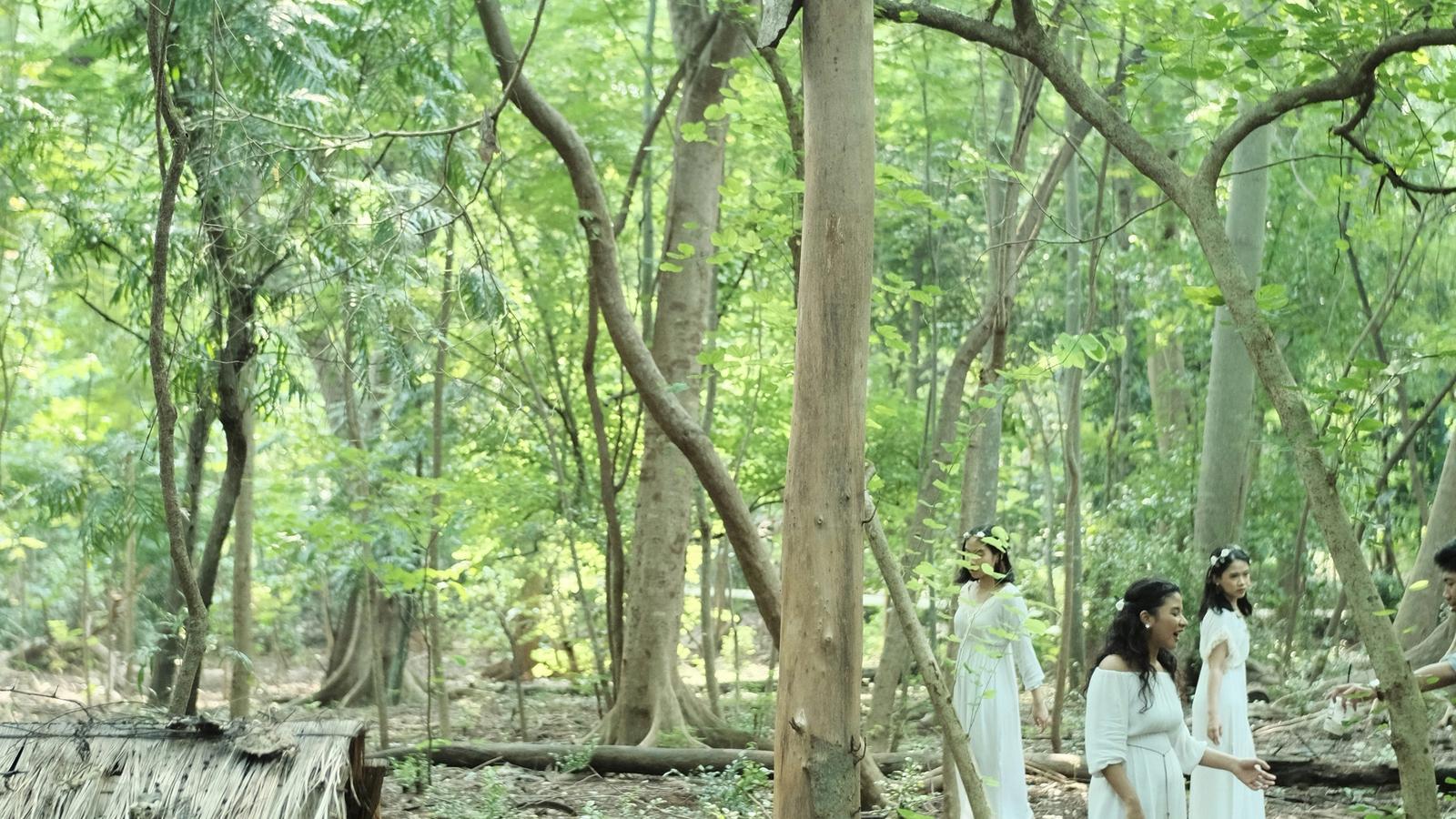
Some places don’t even feel like history in the way you expect. The Osun-Osogbo Sacred Grove is one of them. It is a forest on the outskirts of Osogbo, with the Osun River running through it and shrines, sculptures and sacred spaces throughout the grove.
UNESCO recognizes it as a World Heritage Site and describes it as one of the last surviving sacred groves in Yoruba culture. The city of Osogbo itself was founded around 400 years ago. (UNESCO World Heritage Centre)
You could walk into the grove thinking you’re simply entering a forest. Then you start noticing the sculptures. The shrines. The river. The places of worship. The relationship between the landscape and Yoruba spiritual traditions becomes much clearer.
It isn’t just somewhere beautiful. It is a place where culture, religion, art and history are still connected.
And Nigeria’s history goes much farther north
If we only tell Nigerian history through Lagos and the southern cities, we miss a huge part of the story. The Sukur Cultural Landscape in Adamawa State is a good example. It sits high in the Mandara Mountains near the Cameroon border and contains terraced fields, stone structures, a chief’s palace and evidence of an old iron-smelting tradition.
UNESCO describes Sukur as an ancient settlement with a recorded history of iron technology, trade and political organization going back centuries. (UNESCO World Heritage Centre) Think about that for a moment.
A place in northeastern Nigeria has a landscape that tells a story about farming, technology, trade, political power and community organization. It doesn’t fit neatly into the way people often imagine Nigerian tourism. And perhaps that’s exactly why it is worth knowing.
We sometimes don’t realize how much history is around us
This is probably the part I find most interesting. You don’t always need to travel somewhere that looks ancient to find history. Sometimes history is hiding behind something that looks completely ordinary. A street. A building. A market. A palace. A piece of artwork. A hill. A river.
You just need someone to tell you what happened there. That is one of the reasons I think local guides matter. Google can tell you that a building exists. A guide can tell you why people remember it. A map can show you where a historical site is.
A person who knows the place can help you understand why you should care about it. And that changes the experience.
History shouldn’t feel like homework
This is probably where some people lose interest. The moment someone starts saying, “In 1842…” or “During the 17th century…” it can start sounding like a classroom. But history doesn’t have to be presented that way.
Tell me about the people. Tell me what happened. Tell me what the place looked like. Tell me why someone built something there. Tell me what changed. Tell me what remains today.
Now I want to know more. That’s the kind of history I enjoy when traveling. Not memorizing dates. Understanding people.
Nigeria has more stories than we give it credit for
We often talk about Nigerian tourism through food, music, beaches and nightlife. And we should. Those things are part of the experience. But there is another Nigeria underneath all of that. Kingdoms. Trade routes. Traditional institutions. Religious traditions. Art. Architecture. Conflict. Migration. Colonialism. Resistance. Innovation.
Communities that have existed for centuries. Some of these stories are well known. Others are barely known outside the places where they happened. That’s an opportunity for tourism. Not to turn history into entertainment, but to help people understand the places they are visiting.
Because once you know the story, you don’t look at the place the same way again. And perhaps that’s what makes a really good historical tour. You arrive somewhere thinking you’re going to see a building. You leave knowing a story.
And somewhere between those two things, a place that looked ordinary becomes unforgettable.