London’s Oldest Streets Are Hiding Between Its Newest Buildings
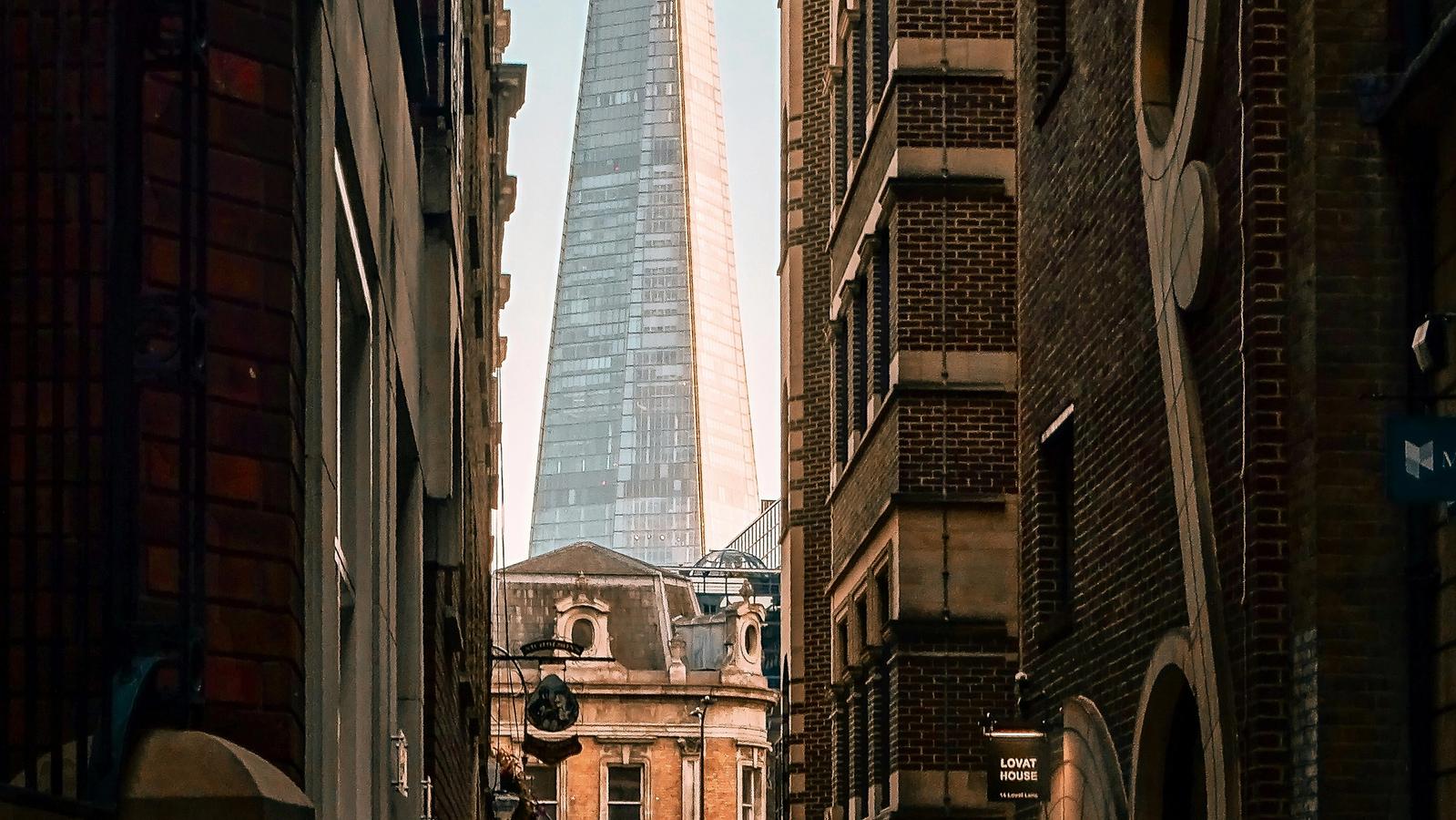
There is something almost unfair about walking through the City of London for the first time. You look up and see glass towers. People in suits. Coffee shops. Construction cranes. Taxis moving through the streets.
Everything tells you that this is a modern financial centre. Then you turn a corner and find a narrow street that feels completely out of place. The buildings are older. The road is tighter. There is an old church tucked between much newer structures.
For a second, London looks like it has accidentally left a piece of another century behind. It hasn’t. That older London is still here. You just have to know where to look.
The City of London is surprisingly old
The City of London is the oldest part of the modern capital, with the Roman settlement of Londinium established around AD 50. The Romans built a bridge over the Thames and developed a settlement around it, and the city’s early street pattern grew from that original centre.
That means some of the roads you’re using today have very old roots.Not necessarily the exact same paving. Not necessarily the exact same buildings. But the shape of the city has memories.
Fish Street Hill, Bishopsgate, parts of Cheapside and other routes follow or reflect older routes through the city. Archaeological evidence has repeatedly shown how much of modern London has been built around earlier streets and structures.
You can look at a map of the City today and think you’re looking at a modern business district. In some places, you’re really looking at nearly two thousand years of urban planning.
London was not designed to look pretty
This is something you notice when you walk through some of the older parts of the City. The streets twist. Some are narrow. Some seem to end suddenly. Some have names that sound strangely specific. That’s because they weren’t designed all at once by someone sitting at a desk with a master plan for modern London.
They grew. They changed. Businesses appeared. Markets developed. Buildings were demolished and rebuilt. People created routes based on where they needed to go.
The medieval City was particularly dense, with narrow streets and passages connecting markets, homes, workshops, religious buildings and places of trade. Many of those routes survived in some form into later periods. That is why walking through parts of the City can feel different from walking through London’s wider streets. The city hasn’t completely forgotten the way people used to move through it.
The names give things away
One of the easiest ways to start noticing London’s history is to pay attention to street names. They aren’t always random. Some preserve old occupations. Some refer to geographical features that have disappeared. Some tell you what used to happen there.
The City of London records, for example, that Lime Street is connected to lime burners and sellers, while Fenchurch Street may relate either to hay or to the former marshy ground associated with the Langbourn stream.
And then there is Fleet Street. Most people know it because of newspapers and journalism. But its name comes from the River Fleet, which once flowed into the Thames near what is now Ludgate Circus. The river itself eventually disappeared beneath the growing city.
That changes the way you think about the street. You’re no longer just walking down Fleet Street. You’re walking through the remains of a landscape that no longer exists above ground.
The city is full of things that disappeared
This is perhaps the most fascinating part. London has not simply preserved old buildings. It has preserved traces of things that aren’t there anymore. Rivers disappeared underground. Walls were demolished. Markets moved. Wharves changed. Entire neighborhoods were rebuilt.
The Roman city itself went through periods of decline and transformation. After Roman rule ended, settlement shifted westward to an area known as Lundenwic before the walled city was re-established as an important centre under Alfred in the late ninth century. So when you’re walking through London, you aren’t necessarily looking at a continuous city.
You’re looking at several Londons layered on top of one another. Roman London. Saxon London. Medieval London. Tudor and Stuart London. Georgian London. Victorian London. Modern London. They didn’t all disappear when the next version arrived. Pieces survived.
Then London burned
The Great Fire of 1666 destroyed a huge part of the City. It is easy to imagine that the fire simply wiped the old city away and London started again. But the reality was more complicated.
Rebuilding changed the city, but older routes and structures continued to influence what came next. Some streets were widened or altered, buildings were rebuilt and new architectural ideas appeared, but the underlying history did not simply vanish.
That is why modern London can feel so strange. You can stand beside a building that looks completely contemporary and then discover that the street beneath it has a history far older than the building itself. The building is new. The route is not.
Look down, not just up
This might be the best advice I could give someone exploring the City of London. Everyone tells visitors to look up. Look at the skyscrapers. Look at the architecture. Look at the famous landmarks. Do that. But also look down. Look at the street names. Look at the shape of the lanes. Look for plaques. Look for old churches. Look for sections of wall. Look at the odd little passages that seem too narrow to belong in a modern financial district.
Some of London’s best history is not shouting for your attention. It is sitting quietly beside your route to somewhere else.
Take London Stone
There is even a strange old stone at 111 Cannon Street known as London Stone. Its history is uncertain. The name is recorded from around 1100, and it may have Roman origins, but its original purpose isn’t known for certain. Over the centuries, however, it became an object of fascination and speculation.
That uncertainty is actually part of what makes it interesting. Not every historical object comes with a perfect explanation. Sometimes you have a piece of something old and a collection of questions around it. And that is much closer to real history than the neat stories we often learn in school.
There are Roman remains beneath the modern city too
Near Guildhall, for example, the remains of London’s Roman amphitheater are beneath the modern city. Guildhall itself has been an important centre of City life for centuries, while the site underneath connects it to Roman London.
Elsewhere, Roman baths, walls, roads and buildings have been discovered beneath streets and modern structures. The City of London Corporation describes the archaeological layer beneath the City as exceptionally complex because of its almost continuous occupation from Roman times through the Saxon and medieval periods to today.
Think about what that means. When you walk through the City, there can literally be another city underneath your feet.
This is why London rewards walking
You can see London’s major attractions from a bus. You can photograph them from a distance. You can read about them online before you arrive. But the older parts of London reward something much simpler. Walking without rushing. Taking a wrong turn. Noticing a street because its name sounds strange.
Stopping outside a church. Following an alley because you are curious where it leads. Looking at a building that doesn’t seem important and then finding out that it has been standing there, in one form or another, while the city around it changed completely.
That is when London starts to feel less like a list of landmarks and more like a place with a memory.
The modern city hasn’t replaced the old one
It has simply built on top of it. That’s probably the easiest way to understand London’s history. The skyscrapers didn’t erase the Roman roads. The financial district didn’t erase the medieval lanes. The modern streets didn’t completely erase the rivers and walls that came before them.
They just became another layer. And perhaps that is why London can feel so different from one street to the next. One minute you’re surrounded by glass and steel. The next, you’re standing beside a church that has survived centuries of change. You turn another corner and find a Roman wall.
You walk a little farther and the skyline changes again. The city keeps moving forward, but it carries pieces of its previous lives with it. You just have to slow down enough to notice them. And that, more than any single landmark, might be one of the best ways to experience London.